



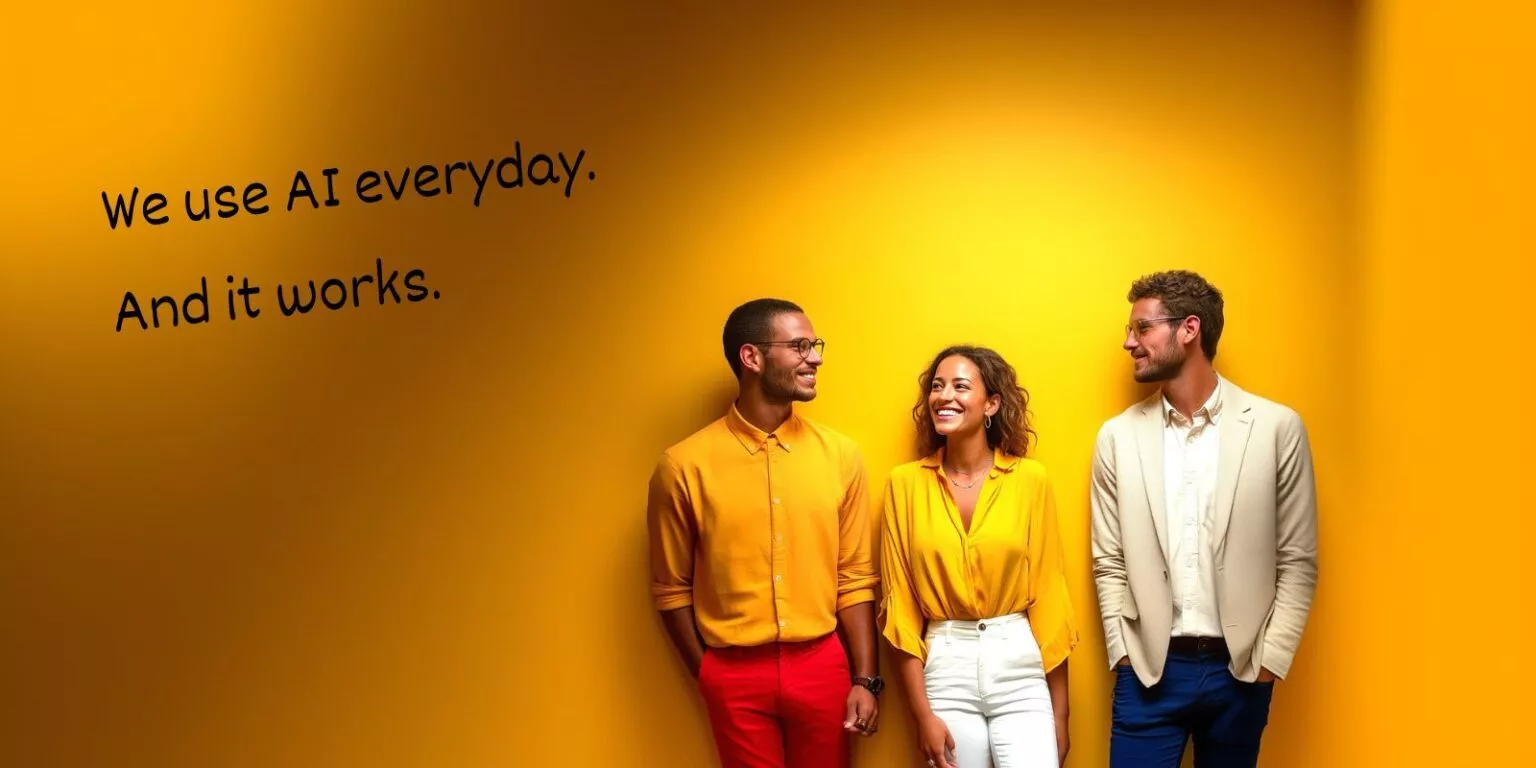
Ein Interview mit Ashley Goldsmith (Chief People Officer, Workday) lotet einen großen Bereich der Unternehmens-Spielwiese aus und hinterfragt, was passiert, wenn HR, Technologie und globale Teams zusammenspielen.
Ashley spricht über Kulturwandel, den produktiven Einsatz von KI und den Wandel der HR-Rolle hin zur strategischen Business-Partnerin.
➤ Siehe auch das kürzlich erschienene HRweb-Interview mit Ashley Goldsmith
„HRweb-Interview | HR im rasanten Wandel, KI ist erst der Anfang ist & Menschen bleiben Priorität“
Interview-Partnerin
Ashley Goldsmith ist Chief People Officer bei Workday und verantwortet die globale Personalstrategie, HR‑Organisation, Diversity‑Programme, interne Kommunikation und Initiativen wie den sozialen Impact des Unternehmens.
The most exciting project
What was the most exciting project for you during the last two years?
What I really liked was “Everyday AI”: We were looking across the company, and saying we really want our employees to be using these enterprise-wide AI tools that we have deployed. And we saw that we had a percentage of people using them, but we wanted 100 percent, not 30 percent. And so we said: how do we drive this engagement and what’s getting in the way? So, we did some research internally to see what the barriers were, and we found a few things that were getting in people’s way.
- One was they weren’t sure if they really had permission. Like, “I know they say they want us to use AI, but do they really want us to use AI?”
- Or the time: “Oh, I just don’t have time to mess with it. I have to learn it, and I don’t have time”.
- And then the other one not really knowing what to do or where to start.
- And the big thing that would overcome that was peer learning. You know, you don’t learn what the cool apps for your phone are, except when a friend tells you. It’s not because IT told you to try this app.
So, we took those knowledge bits, and with that, we began a program we call “Everyday AI”. I call it more of an imperative than an initiative to have people using AI every day just as part of your normal course. We wanted all of our employees just to start using AI. And so we came at this really broadly with the intent of overcoming those things.
We kicked off with this company-wide meeting. And instead of the CIO getting up to talk, and somebody doing demos, we had employees who we knew had been using it. And these three employees got up, and they just shared what they did and how they used it, and the problems they solved. And they were really relatable.
So then we turned it into gamification where people could use AI as a team on their sub-teams. And we saw just this huge uptake. We’re 80+ % now. People are using these AI tools on a regular basis. And it’s fun. And managers, it really changed from “I’m embarrassed to tell my manager I used AI“ to “I proudly say: I’m going to show you this.“ And, “I used AI to do that part, what do you think?“ People are pleased and proud of themselves for making something easier.
That was a really fun project for us to work on, because it had a big impact in a short period of time.
Cultural differences
How do you deal with cultural differences in teams, as well as your team in the US, but also for different teams around the globe?
We have some trainings that we do. We use a technology where you can watch a short little snippet, cultural tidbits, like, “did you know this about working with your colleagues in India?”
And so, we have these programs and when people have cross-global border teams, we encourage them to use this. And we just started that probably a year ago.
And your question is so timely because our VIBE team’s (which stands for Value Inclusion & Belonging for Everyone) focus for the coming year is on just what you said: It is on the cross-functional, intercultural, how do we help make sure that people feel like they belong and they’re part of a team, regardless of where they’re located in the world, what their native language is, that they really feel like they’re part of a team.
I envision this whole body of work having both elements that are automated and non-automated. But just to give an example, if I was a member of a team and I had a peer that joined the team, and I’ll use India again as an example, I have a peer that’s now based in India, that I would be automatically pushed a little vignette that says, “I notice that you’ve got a new teammate in India. Thought you might want to learn a few things about working with colleagues who are based in India.”
I think there’s this wonderful opportunity to make it just in time, very approachable, and to be business process triggered. “We’ve noticed you’ve just picked up a French employee. You should know this about leading people who are based in France”. We’re excited about that. That’s a body of work that we’re just now doing scoping of the project.
So, at this time next year, I’ll probably have some really good stories to tell.
Is it something that you do once for all employees until they have knowledge or will it be a continuous process?
I don’t really love anything that’s just one time. Because I think, first of all, the company changes and grows, and you did it once, and now new people don’t ever get it. But also, I think it’s hard if it’s not relevant for you at the moment.
And I think that’s why I love putting it in the business process, so that it’s dynamic. I get what I need when I need it. Otherwise, it’s a bit of an overarching platitude, too. We should all embrace people of different cultures. Okay, yes, we all nod and smile, but what does it really mean for me right now? So that’s why I envision this being about setting up things that continue and can be ongoing.
HR in 5 years
If you envision HR in five years, what would be your boldest guess?
I wish I had that crystal ball. I certainly think it will be different.
I certainly see the business partner piece being extremely strategic, very outcome-oriented, tied to the business strategy and business growth.
I feel like we’re going to have so much technology surrounding us, and there’s more folks that wear a multitude of different hats. We actually have a team, we call it the accelerator team, and they have cross-functional experience, and they really swarm to wherever a problem is, and they work alongside COEs on something. Everyday AI is a good example: We had a COE that was the subject matter expert on leading that Everyday AI imperative, but we took folks from this accelerator team to really amplify it to make this happen fast, really fast.
I can see a world where there’s a lot more of that because you can get a lot of the expertise off of your AI colleagues and really can swarm folks like the accelerator team talent to be able to say “let me bring that thing that I have, which is a unique perspective across the business, the ability to tie different things together and move with pace in a very outcome-oriented way.
I feel like we talk a lot about outcomes now. I feel like outcomes will be much more how we structure ourselves.
Fazit
Ashley Goldsmith zeigt eindrucksvoll, wie moderne HR-Arbeit zur strategischen Triebkraft in Unternehmen wird: Mit Projekten wie „Everyday AI“ verwandelt Workday technologische Visionen in gelebten Alltag: niederschwellig, wirksam und kulturell verankert. Ihr Ansatz, Mitarbeitende über Peer-Learning und Gamification für KI zu begeistern, zeigt, wie man Technologie einführt und gezielt verankert.
Gleichzeitig rückt sie den globalen Zusammenhalt in den Fokus: Durch clevere, kontextbezogene Trainings zu kulturellen Unterschieden stärkt Workday das Gefühl von Zugehörigkeit über Ländergrenzen hinweg.
Ihre Vision für HR in fünf Jahren? Hochgradig vernetzt, technologiegestützt, aber zutiefst menschlich. Mit Teams, die agil, interdisziplinär und ergebnisorientiert arbeiten.
My most exciting HR-Project was “Everyday AI” | Ashley Goldsmith (Chief People Officer, Workday)